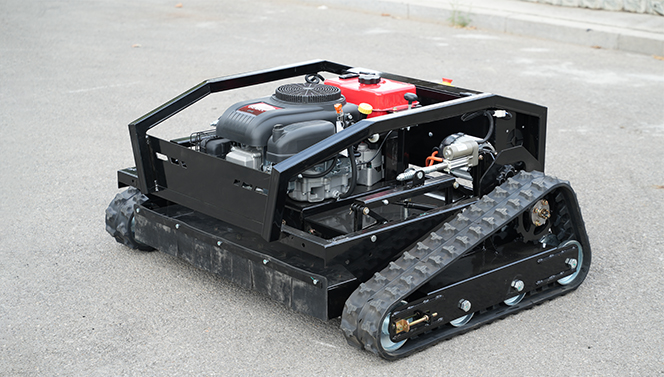
Tracked remote-controlled mowers are the mainstream equipment for weed removal in orchards, sloped land and wasteland. Many buyers focus on power, tracked chassis and remote control range when selecting machines, yet they often overlook blades, this core accessory. Blades directly determine cutting quality, mulching effect, machine vibration and engine load. Selecting and maintaining blades properly unlocks the full performance of remote-controlled mowers and cuts long-term maintenance costs.
Most mainstream blades for remote-controlled mowers are made of 65 manganese steel or SK85 alloy steel and treated with quenching and tempering to balance hardness and toughness. Orchards and slopes feature harsh working conditions, where weeds are mixed with stones and tree roots. Ordinary thin blades are prone to rolling edges, chipping or even breaking. Heavy-duty thick flail blades deliver superior impact resistance; they are not easily damaged when hitting small stones and retain sharpness for longer.
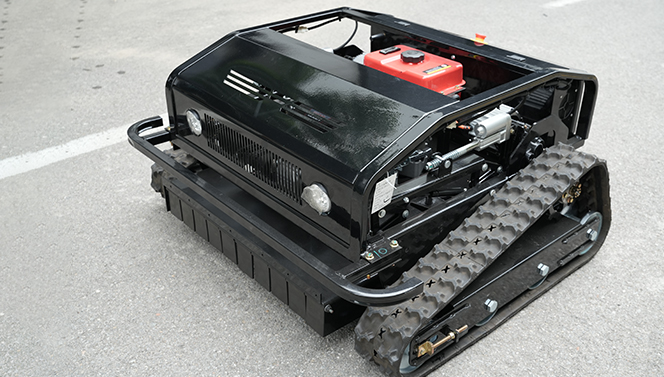
Blades come in straight, curved and serrated flail types. Curved blades work well for thick weeds and vines. Serrated blades cut thick branches and young shrubs more effectively, producing finer mulch that decomposes faster when returned to the soil.
Blade dynamic balance is a critical indicator. A set of uneven or deformed blades generates severe vibration at high rotation speeds, accelerating wear on the spindle, bearings and belts, raising noise levels, and in severe cases, damaging the engine and shortening the service life of the whole machine. New blades are factory-tested for dynamic balance. When replacing or sharpening blades, ensure blades in the same set are identical in weight to avoid cascading faults caused by imbalance.
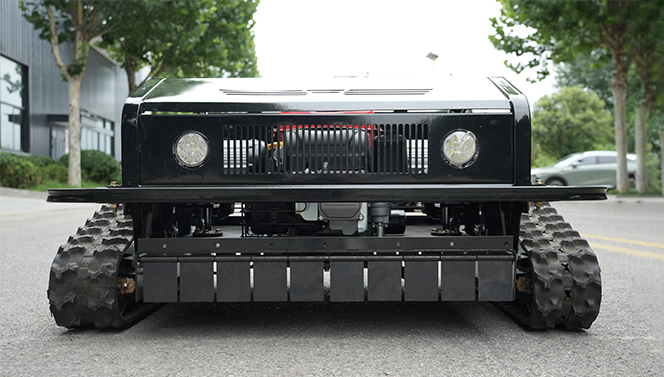
Blades follow clear replacement and maintenance cycles. After prolonged use, cutting edges turn dull. Instead of cutting weeds cleanly, the machine tears stalks, leaving yellowed grass. Meanwhile, power load and fuel consumption rise sharply. Routine maintenance includes regular cleaning of grass roots and dirt wrapped around the cutter disc, and inspection of edges and cracks. Blades with chips, deformation or cracks must not be resharpened and reused; they need immediate replacement to prevent blades flying out and causing safety accidents.
As demand for weeding in mountain orchards and under photovoltaic panels keeps growing, the stock of remote-controlled mowers rises year by year. As a high-frequency wear part, mower blades have become hot-selling accessories. Premium remote mower blades feature stable wear resistance, reliable dynamic balance and wide compatibility. They help global users boost weeding efficiency, reduce downtime and ensure stable weed control operations on slopes and in orchards.